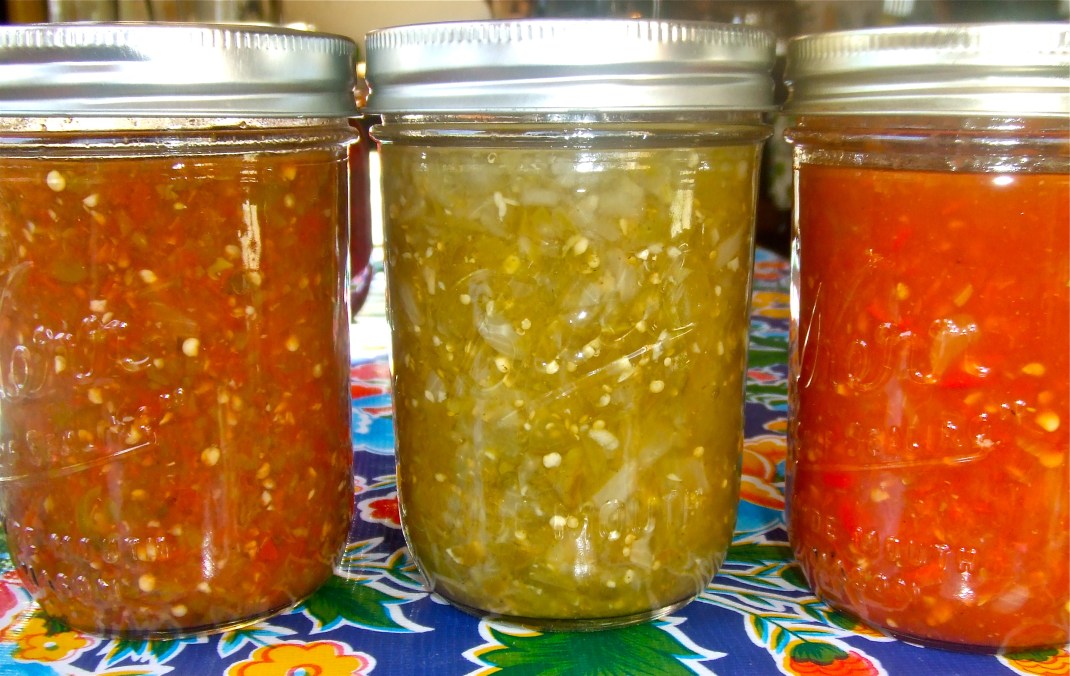
Harvest time ~ busy and abundant are the key words of these weeks. The canner and dehydrator fill up every day. Trees and gardens overflow as the days grow shorter. The sun’s giving us the hard working energy we need for high gear preservation of fresh fruits and vegetables. And the joy that comes with harvest inspires the work of cooking, freezing and preserving.
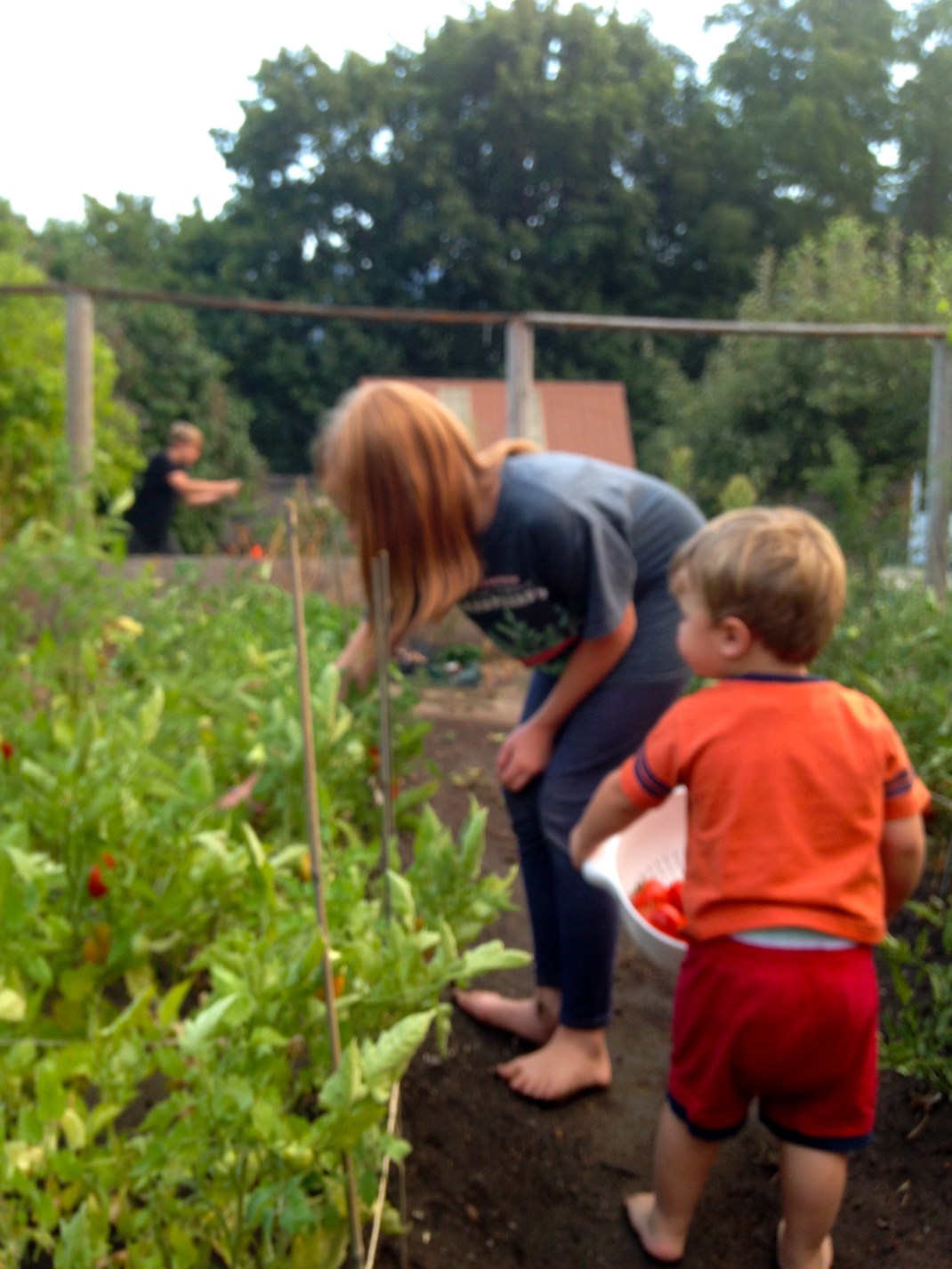
Harvest can be overwhelming when all the produce seems to be ready at once. Planning food production and preservation at summer’s outset is an asset now when timing is key to putting up all that’s been grown and gathered. Utilizing all you have, wasting naught, tis the goal.
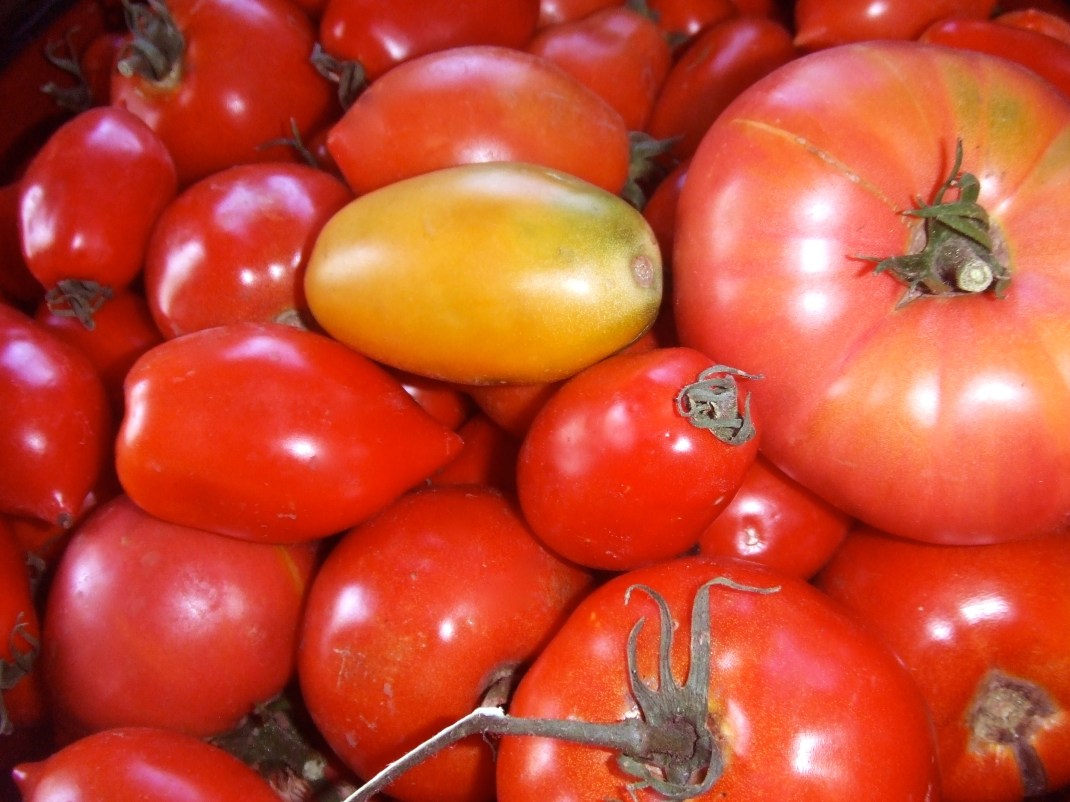
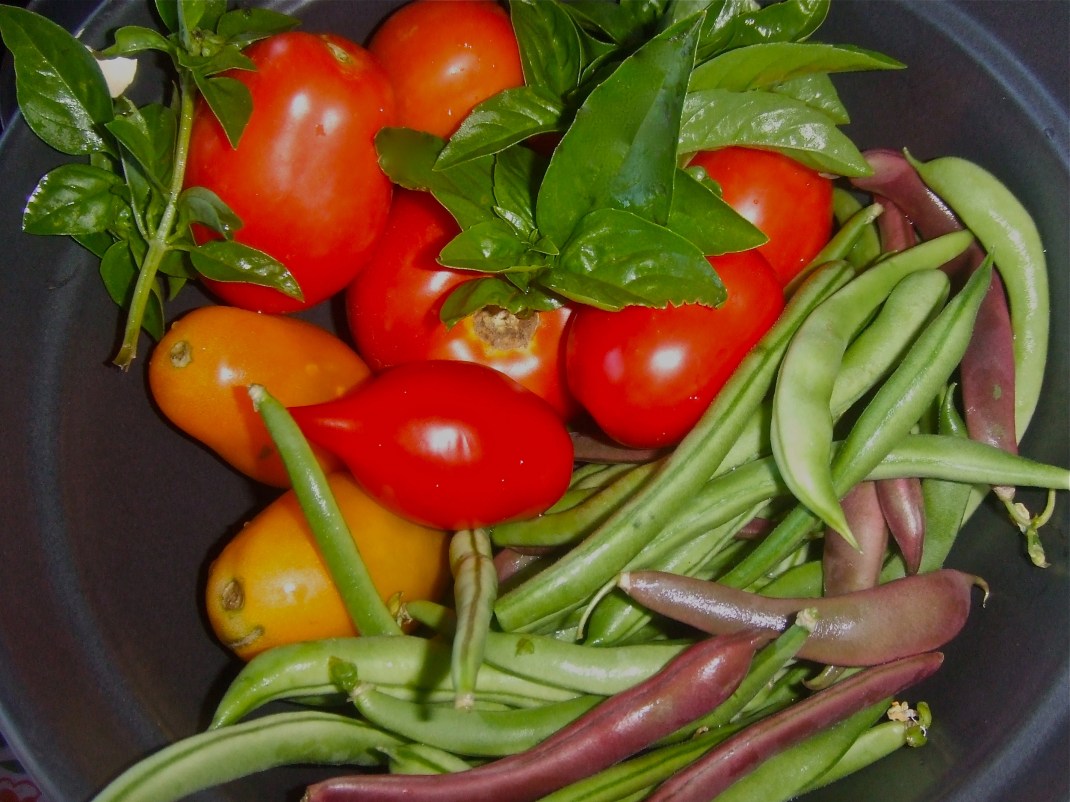
Tomatoes must be used fresh—refrigeration saps their complex sweet flavor. Herbs can be brought inside and potted for winter or hung dry and then crumbled and jarred. Root veggies and hard fruits are stored easily. But as tomatoes are top priority, we often start here. And after making dozens of different salsa recipes through the years, I know this is a useful canner, which I offer as solid and adaptable.
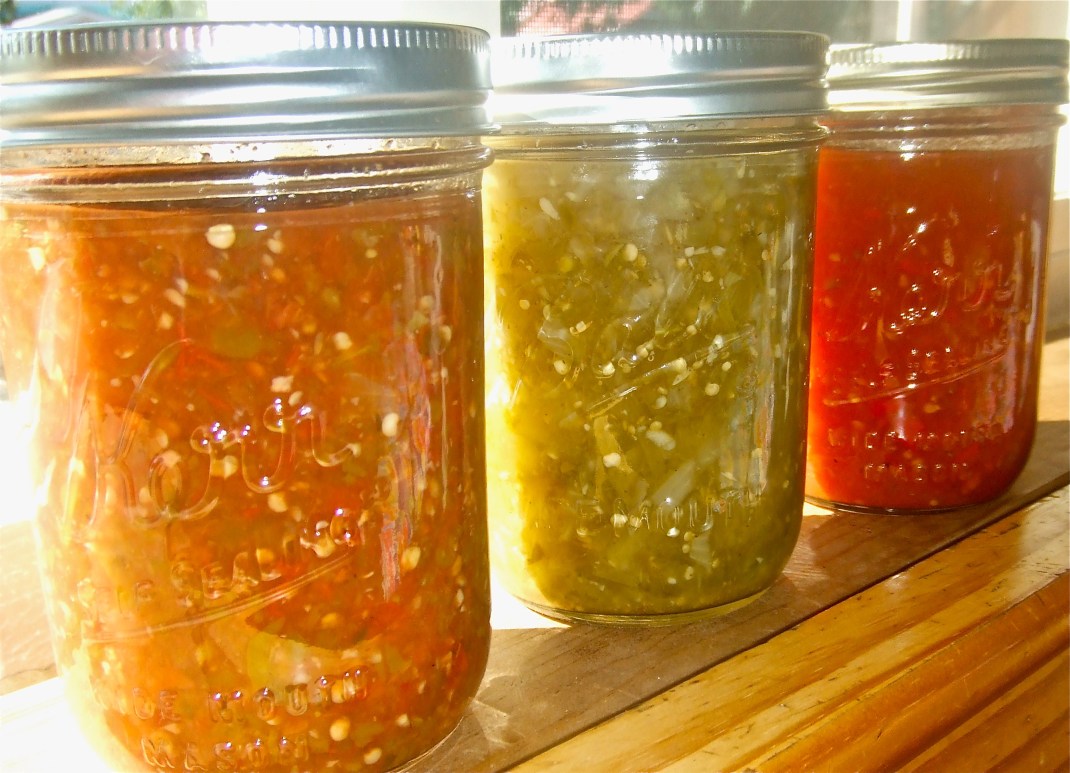
Tomato Salsa for Canning, Max Batch
Tomatoes, about 5 gallons, diced
Onions, about 6-7 diced
Garlic, about 20 cloves, or large 2 heads, diced
Vinegar, 1 1/2 c white wine or cider
Peppers, spicy: jalepenos recommended, about 10 diced
Peppers, sweet: bells, pablanos or banana peppers, 5-6 diced
Salt, 2 T plus to taste
Cilantro, 1-2 bunches fresh chopped (equalling 1-2 cups) stems and all
This recipe is designed for a double batch of salsa in a 20 quart roaster, designed to fill the water canner twice. Cut the recipe in half for one batch made in an 8 quart sauce pot which will yield 7 quarts of salsa to fill the canner once.
As usual, be sure all lids, bands and jars are washed and hot, sitting in boiled water water when ready to process.
For best, fresh flavor, combine all ingredients in a 20 quart roaster or large sauce pot and bring barely to a simmer; do not simmer longer. This will retain the chunky salsa and not thin it out. No worries about flavors combining—they will in the canning process and in the pantry with the slight pickling process that occurs with vinegar based salsa.
Fill hot jars to 1/2 to 1 inch of head space from top and close with hot, new seals and bands.
Process in a boiling water canner: quarts for 25 minutes, pints for 15 minutes.
Remove and let stand 12 hours, checking seal before putting up in pantry.
Sustainable Tips:
Hopefully your garlic is plentiful and punchy for this recipe. I find the spice of garlic to be one of the most important flavors in good salsa. Planting garlic in the fall, be sure get it in before the ground freezes, covering with staw for extra insulation.
Cilantro is easy to grow in a kitchen herb garden or outside. It grows very quickly, and can be reseeded regularly. Cilantro is entirely useful, roots, stems, seeds, leaves and all! The seed is a super sweet one called coriander very common to East Asian curries and pastes. It is good to have on hand for grinding and adding to dry rubs or for reseeding when your cilantro greens get low.
Love from our kitchen to yours ~Gina @ SoulandStomach
 Soul & Stomach
Pingback: Heirloom Days: Tomato-Basil Jam Recipe |
Pingback: Preserved with Perfection | Soul & Stomach
Hi there! This separation of liquids is not really a problem. So don’t worry 😉 as long as your jars sealed you’re good. My salsas come out more or less liquid depending on on the firmness and seediness of the tomatoes. I know some who totally seed their tomatoes to remove liquid content, and that can get your salsa chunkier, but truly it’s not a necessity. Shelve it and try in a couple months and message back here how it turned out for taste! G
I made a scaled-down batch (about 1/3) last night and this morning when inspecting the jars I discovered that my salsa had separated. There is about half an inch to an inch of clear liquid on the bottom and the solids are floating on top of that. In the photos, you salsa didn’t seem to do that. Do you know what I did wrong? Should I simply shake it to redistribute the contents? Thanks!